
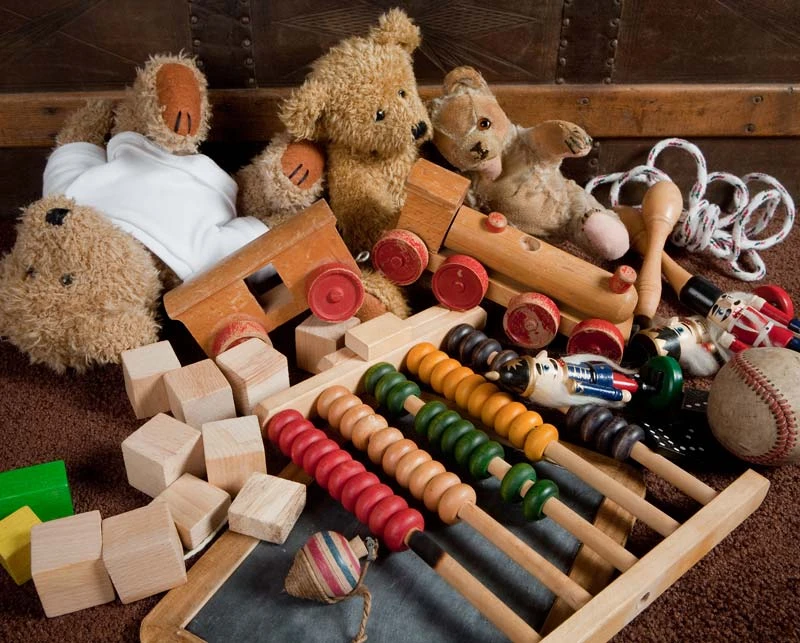
Toys have evolved significantly over the years. This post explores the fascinating history of toys, how they’ve changed, and what modern toys offer to today’s children. Understanding the evolution of toys can give us insight into how play has shaped and continues to shape childhood.
A Brief History of Toys
Toys have been a part of human culture for millennia, each era bringing new innovations and ideas:
- Ancient Toys: Simple toys made from natural materials like clay, wood, and stone were common. These early toys included dolls, miniature animals, and basic games that reflected daily life and social structures.
- Clay Dolls: Found in ancient civilizations, these dolls were among the earliest toys and were often used in rituals or as children’s playthings.
- Stone Marbles: Used by children in ancient Egypt and Rome, marbles were a popular form of entertainment.
- Wooden Animals: These toys, carved from wood, were common in many cultures and served both as playthings and educational tools.
- Medieval and Renaissance Toys: During the Middle Ages and Renaissance, toys became more intricate and diverse. They often mirrored societal roles and technological advancements of the time.
- Miniature Knights and Castles: Reflecting the feudal system, these toys allowed children to enact battles and understand medieval society.
- Board Games: Games like chess and checkers became popular and were used to teach strategy and critical thinking.
- Industrial Revolution: The advent of mass production in the 19th century made toys more affordable and accessible. Materials like tin, iron, and celluloid became common.
- Tin Soldiers: Mass-produced and affordable, these toys were popular among children and collectors.
- Mechanical Toys: Wind-up toys and automata captivated children with their movement and complexity.
- 20th Century Innovations: The rise of plastic toys, electronic games, and action figures marked significant advancements in toy manufacturing and design. Toys became more diverse, catering to various interests and age groups.
- LEGO Bricks: Introduced in the 1950s, these building blocks revolutionized creative play.
- Barbie Dolls: Launched in 1959, Barbie dolls became an iconic toy, representing fashion and aspirational roles for girls.
- Electronic Games: The late 20th century saw the rise of video games, beginning with simple arcade games and evolving into complex home consoles.
Modern Toys
Today’s toys integrate technology, sustainability, and educational value to create engaging and meaningful play experiences:
- Tech-Integrated Toys: Robots, tablets, and interactive learning devices provide immersive play experiences. These toys often include elements like augmented reality, AI, and connectivity to other devices.
- Educational Tablets: Devices like LeapFrog and Osmo offer educational games that teach math, reading, and science in interactive ways.
- Smart Robots: Toys like Cozmo and Sphero teach coding and robotics through play, blending physical and digital worlds.
- Eco-Friendly Options: Toys made from sustainable and recycled materials address environmental concerns. These toys teach children about sustainability while minimizing environmental impact.
- Bamboo Building Sets: Durable and environmentally friendly, these sets promote creative construction.
- Recycled Plastic Toys: Companies like Green Toys produce toys from recycled milk jugs, reducing plastic waste.
- Educational Focus: Modern toys are often designed to promote learning and development. STEM toys, in particular, encourage skills in science, technology, engineering, and math.
- STEM Kits: Kits that allow children to build robots, conduct experiments, and explore scientific concepts.
- Interactive Books: Books that use technology to engage children in reading and learning through sounds, lights, and interactive elements.
Impact of Toy Evolution on Play
The evolution of toys has influenced how children play and learn:
- Cognitive Development: Modern educational toys enhance cognitive skills, critical thinking, and problem-solving abilities.
- Physical Development: Toys that encourage physical activity promote healthy living and motor skills.
- Social Development: Interactive and role-playing toys foster social skills and empathy.
Conclusion
Explore the fascinating evolution of toys and discover how modern toys can benefit your child. From ancient dolls to high-tech educational devices, toys have continuously evolved to enhance play and learning. Visit our store to see the latest trends and timeless classics, and find the perfect toy that combines fun, learning, and innovation.

